

Around 400,000 years ago, a group of Neandertals camped at a site in what’s now southern England. Near a grassland water hole, they struck chunks of iron pyrite against flint to create sparks that lit campfires. And they did this on multiple occasions. A close look at remnants of those burns now shows they are the oldest clear evidence of ancient human relatives purposely making fire.
“You get a tingle down your spine,” says Nick Ashton. Starting fires on purpose “is a major change in how human societies begin to operate,” he says. Ashton is an archaeologist at the British Museum in London, England. His team analyzed these remains, which included fire-striking tools and chemical traces of the burns.
Until now, the oldest known use of iron pyrite and flint to strike fire came from northern France. Those artifacts were left by Neandertals a mere 50,000 years ago. The new discovery in Barnham, England, extends fire-making back another 350,000 years.
Ashton’s group shared its findings in the January 15 issue of Nature.
A milestone in human evolution
What’s cool here is that it’s the first excellent evidence of not just fire use so long ago — but fire–making, says Marie Soressi. She’s an archaeologist at Leiden University in the Netherlands who did not take part in the new work.
“Being able to have [fire] at will is really a game changer,” she says. It transformed human evolution.
The light and warmth of a campfire scared away predators. It provided a place for early humans to socialize at night. Cooking food could neutralize some toxins, extend the food’s shelf life and make food easier to digest. All of that may have boosted human brain development.
In the past, there were other human species related to our own, Homo sapiens. These close cousins were all part of the same group of species, known as the Homo genus. Neandertals (Homo neanderthalensis) were among these close relatives.
Ancient humans likely used fire for more than a million years. Sites in Kenya and South Africa show signs of fire use by the species Homo erectus. A site in northern Israel has remnants of hearths from about 780,000 years ago. But no fire-striking tools were found in these places. So it’s unclear whether those fires were gathered or made.
Barnham burns
The Barnham site has long been known for its ancient stone tools. In 2014, Ashton and others in his team found heat-shattered flint there. Back then, they couldn’t be sure it didn’t come from a natural fire.
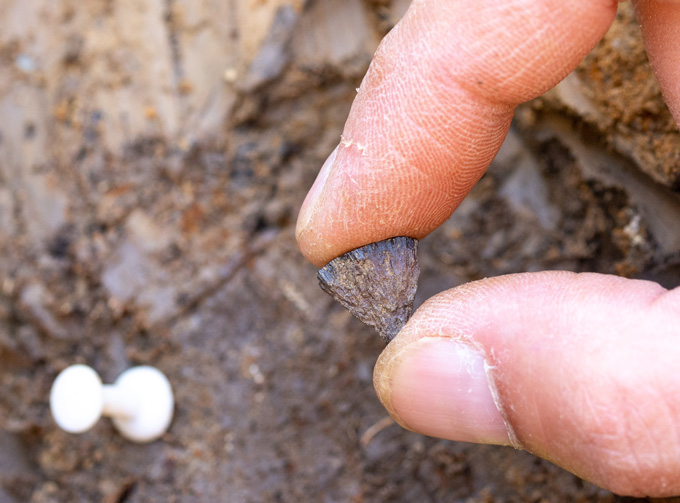
Three years later, the team found bits of iron pyrite. Those shards can be used to strike sparks. But it was unclear whether they had arrived at the site naturally or were brought there.
In 2021, the team had “the first proper breakthrough,” Ashton says. He spotted reddened clay in a long-overlooked area. “I thought, ‘I’m sure that looks like heated or burnt sediment.’”
Chemical analysis hinted that the sediment had been heated multiple times to more than 700º Celsius. (That’s nearly 1,300º Fahrenheit.) Iron pyrite is extremely rare in this area, which suggested it had been brought there.
“I’ve been generally skeptical of fire-making claims,” says Dennis Sandgathe. But finding chunks of iron pyrite near fire residues is “a pretty compelling argument that they’re making fire.” Sandgathe is an archaeologist at Simon Fraser University in Burnaby, Canada.
Do you have a science question? We can help!
Submit your question here, and we might answer it an upcoming issue of Science News Explores
Fire starters
Few human remains have been preserved at Barnham. The ancient campfires there date to a relatively warm period between ice ages. But the age of fire remains and tools offer clues to who left them. The researchers believe the fire makers were early Neandertals or a closely related group.
Many questions remain about early fire use. Did fire-making knowledge spread fast among groups of people? Or did it arise many times in isolated communities?
“It’s highly possible that it was invented and then lost,” Soressi says. She suspects this is the case because groups of people back then were so few and far between.
Even so, Ashton thinks future discoveries may reveal that fire-making was more common than we thought. “I think we always underestimate the ability of our early ancestors.”