

One warm morning in the summer of 2025, the Beaver Brigade marched into Bernheim Forest. This woodland spans more than 16,000 acres (6,475 hectares) in north-central Kentucky. Every other month, volunteer brigade members hike in to make it more beaver-friendly.
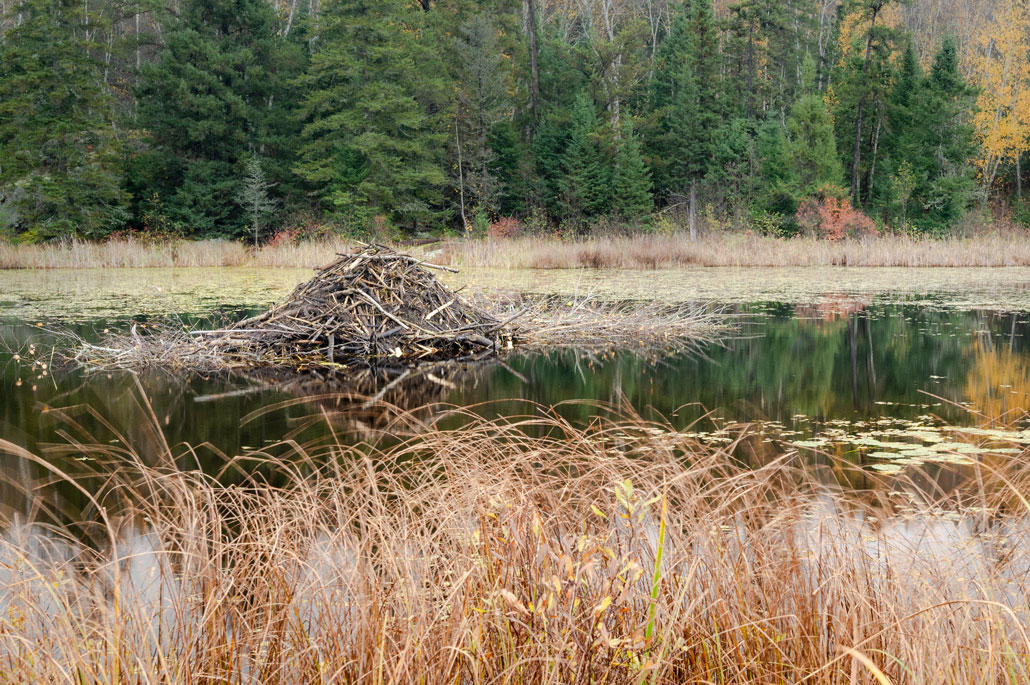
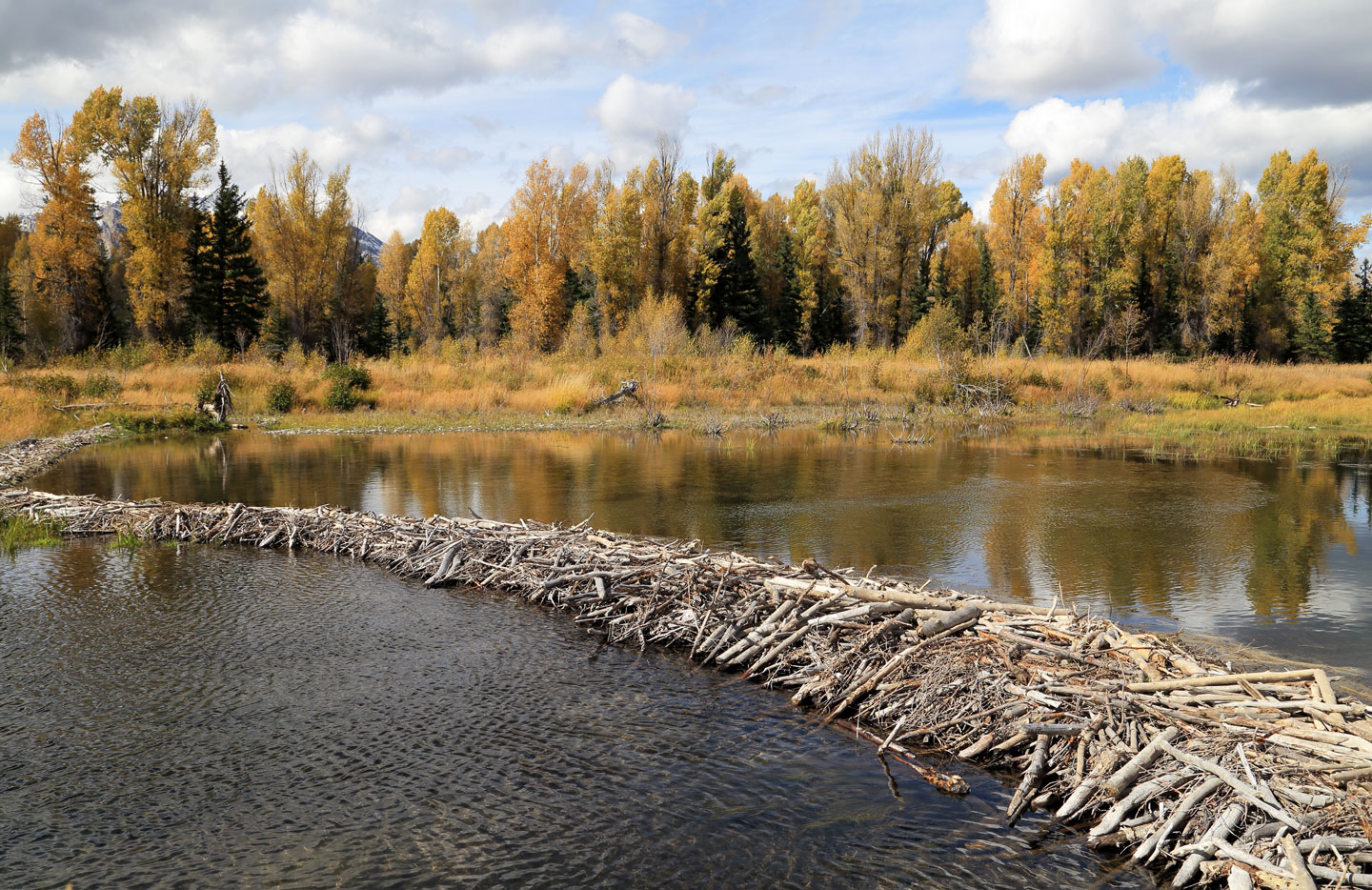
Beavers are nature’s engineers, notes Evan Patrick. A brigade member, he helps manage the forest. Beavers build dams across streams to create small, protected ponds. The large rodents also build their homes, called lodges, in those ponds. Beaver dams and their ponds shape how water moves through a landscape. They also help keep streams healthy.
The Beaver Brigade wants to help these animals out.
Sometimes they count beavers to see how many are around. Sometimes they plant shrubs or trees the critters eat or use as building materials. Sometimes they scout for new dams or signs of new lodges.
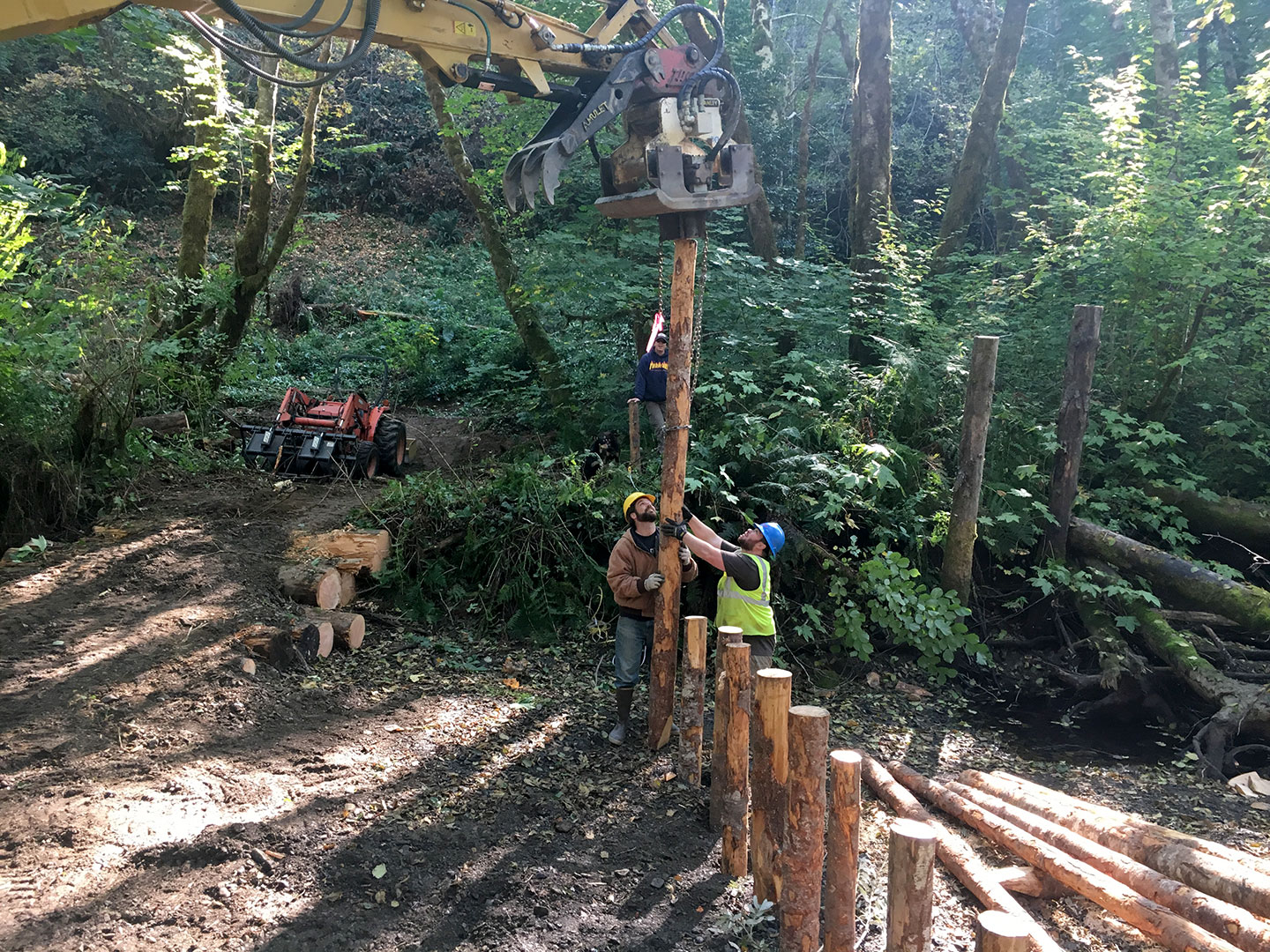
That morning, though, they went into the forest to imitate the beaver’s most famous skill: dam-building. After arriving at a stream’s muddy banks, they pounded thick, upright wooden posts in a line across the waterway. The bottom of the poles reached deep into sediment on the stream’s floor. Then they wove willows and grasses between the posts.
This contraption of posts and willows is called a beaver-dam analog, or BDA. It took about a day to make and might hold up for years. The goal, says Patrick, is to start a new dam that beavers will finish.
Over the past five years, he has led the construction of more than a dozen BDAs in Bernheim. Sometimes they replace a dam wiped out by a strong current or storm. Other times, these fences through streams might encourage new beavers to move into the neighborhood. For instance, the brigade wants to draw beavers to a part of the forest far from roads and an arboretum (a section dedicated to protecting trees).
If successful, a BDA’s effects can extend well beyond the beavers. Studies of BDAs around the world have found a wealth of benefits from these low-tech, low-cost structures. Vegetation flourishes beside dammed streams. BDAs also may improve stream habitat and even water quality.
By taking cues from beavers, researchers have been learning new ways to restore damaged river ecosystems.
Lessons from wild engineers
Centuries ago, hundreds of millions of beavers inhabited North America’s waterways. But starting in the early 1600s, people wanted to make clothes and hats from soft fur. Beaver pelts became became the heart of this fur trade, especially among the growing numbers of European settlers.
By 1900, the number of beavers in North America had fallen to 100,000, according to the U.S. Fish and Wildlife Service.
With fewer beavers, many watery landscapes began shrinking — and then vanishing. Instead of streams spreading out, they now carved narrow channels through the land. People began planting crops and building houses in the wide, flat areas left behind.
Then, around two decades ago, scientists began to rethink what a natural, healthy river should look like.
Before European settlers began setting up mills, ecologists found, American rivers had meandered. They spread out. They were messy, muddy things. This river rethinking led scientists to look again at the animals living in these waters, notes fish biologist Michael Pollock. They included beavers.
Now, he and other scientists recognize how beaver dams improve the health of streams and the animals along these waterways.
Do you have a science question? We can help!
Submit your question here, and we might answer it an upcoming issue of Science News Explores
Pollock works for NOAA Fisheries. This part of the National Oceanic and Atmospheric Administration focuses on increasing fish populations and improving their habitat. Back in the early 2000s, Pollock was studying how salmon and steelhead trout responded to stream-restoration work. These types of fish are born in freshwater streams. Later, they migrate to the ocean where they will grow up. When it’s time to spawn, they’ll return to the freshwater and lay eggs.
Pollock was getting worried about the young fish, called smolts. They’re the ones that swim from their birth streams to the sea. The number of steelhead smolts in local waterways had been shrinking for years, Pollock noticed. He also knew smolts flourish in streams where beavers build dams. Those beavers had tended to create wide, cool pools.
In a 2004 paper, Pollock connected the removal of beaver dams to plummeting populations of salmon. Dams slowed the water’s flow, he suggested, and created cool, food-rich pools where young fish could thrive. Fewer dams meant less smolt habitat.
An idea began to take hold: Could building BDAs help the fish, too?
A solution for steelheads
Pollock took his idea to Bridge Creek, in central Oregon. Beavers had once been common here. But after centuries of fur trapping, they had all but disappeared. Any beavers that remained had a hard time. They might start working on a dam, Pollock says, and “it was looking like the system was starting to recover.” But before the dam was finished, the creek would suddenly start flowing extra fast. And this destroyed the dam. “Every spring during high flows, they were blowing out,” he says.
Pollock could see the problem: Bridge Creek was incised.
An incised stream has sharp, steep sides — and may be narrow. Human activity can trigger this. It might be follow a removing of obstructions, such as beaver dams or vegetation. Suddenly, water flows sped up and carved deep, narrow channels into the ground.
Stream engineering
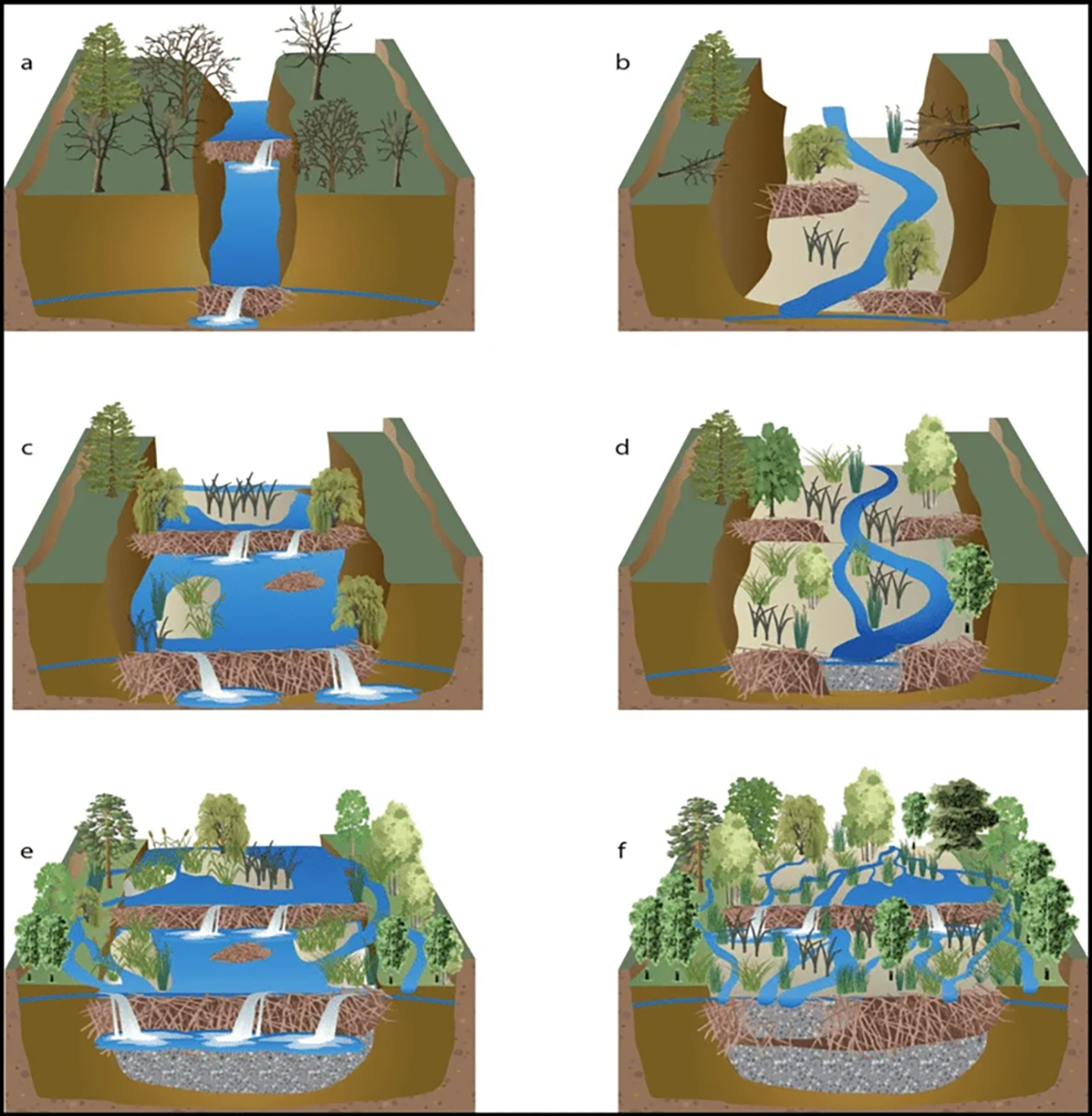
Beavers may try to build dams in incised streams (a). Deep, fast-flowing water in these streams can blow out dams, but may widen the channel (b). This makes the floodplain wider and reduces the stream’s power, allowing beavers to build new dams (c). Over time, dams may be abandoned and break, but new vegetation can start to grow (d). The beavers may repeat this process many times, leading to more sediment accumulating on the bottom of the stream. Eventually, the stream level rises (e) and more vegetation grows (f). The stream is wider and healthier than it was before.
Beaver dams survive better in slow, shallow waterways. Steelhead trout prefer the same types of streams as beaver dams.
Recalls Pollock: “We thought, well, what can we do to help out the beaver?” Maybe help the beavers build a dam?
So that’s what they tried.
In 2008, Pollock and several others tromped to the site of a broken-down beaver dam in Bridge Creek. They waded into its fast, cold water to pound in tall wooden posts. They stuck them into the stream bed deep enough to withstand a strong current. In the end, a line of them stretched across the stream, a little more than one foot (30.5 centimeters) apart. Then they wove willow branches between the posts. This barrier slowed the flow of water while still letting it pass.
Why willows? They were already part of this ecosystem. If the dam were to blow out, these pieces wouldn’t cause any harm. Some washing downstream might even regrow. Plus, Pollock adds, willows are “beaver food.” If the dam broke, at least the beavers would get a snack out of it.
Pollock’s crew had picked a location where they knew beavers had built before. They hoped beavers would come back and finish the job they’d started.
Beaver takeover
They didn’t have to wait long. When Pollock returned to see if the barrier needed repairs the next year, there was little to do.
“The beaver came in and rebuilt things,” he reports. “It was amazingly successful.”
The initial scaffolding had turned into a full-fledged beaver dam. Busy builders had added wood and mud to shore up the structure.
And more than the beavers saw benefits. Water backed up behind the dam to create large pools. Sediment — loose sand and rocks — began settling onto the stream bed. This raised the water level and widened the waterway. Vegetation grew in the shallows, which further helped capture sediment. Erosion of the steep banks slowed. And steelhead trout now basked in the shallow, flooded plains.
Encouraged by this, Pollock’s team built more BDAs along Bridge Creek.
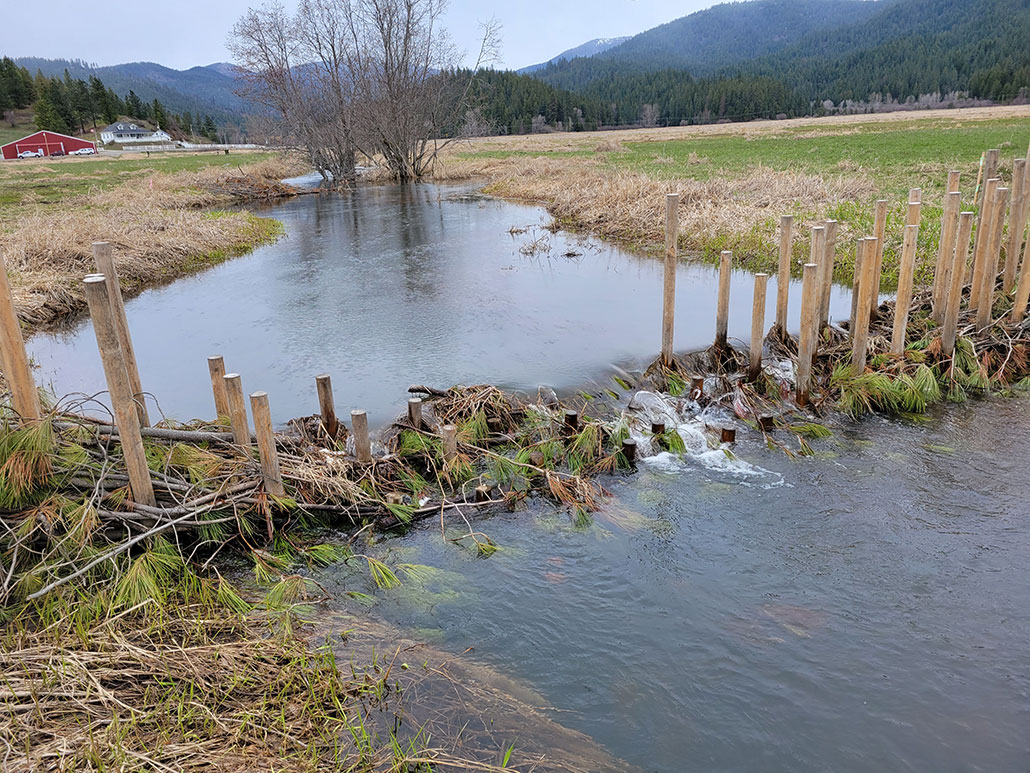
The structures supported the natural surroundings. Back then, he notes, most efforts to improve streams used big machines, such as bulldozers, to reshape water flows. They actually excavated the whole floodplain, he points out, and just lowered the stream.
BDAs take a different approach. With less money and fewer bulldozers, they trap sediment to raise, widen and slow an incised stream. This naturally returns flooding to the original floodplain.
Beaver dams don’t last forever. So that first dam is probably long gone, Pollock says. But that’s to be expected. The rodents will move on. Baby beavers will grow up to build their own dams.
Since Pollock’s crew built its first BDA, these structures have popped up not only across the American West but in other countries, including Switzerland and France. Researchers have tested new designs and sizes. Some BDAs have been built to widen floodplains. Others have focused on bringing back beavers.
“It’s a remarkable tool,” says Pollock. “And it’s low cost.”
Leaving it to beavers
Pollock estimates he’s helped construct thousands of BDAs since pounding those first poles into Bridge Creek. Some he built on his own. On others, he advised the teams building them. “The philosophy I developed,” he says, “was: ’Let’s make it as close to a beaver dam as possible,’” That means using what beavers might use. And choosing sites where a beaver might build.
Building a BDA is simple. Designing one, however, can be tricky, he notes. It must be low cost and function well. And beavers have to find it inviting (which isn’t always easy to predict). Plus, engineers must plan for what happens when a BDA falls apart. Any broken-down pieces should blend in with the environment.
A BDA can impact people who depend on the rivers, too. Sometimes, Pollock says, ranchers or farmers living nearby have their doubts. They might resist the idea of increasing the floodplain or changing the way the water flows.
“There were landowner issues” with the first dam he built, Pollock recalls. People worried the new upstream dams would slow water coming to their land. But scientists explained that flooding doesn’t have to be bad. Healthy streams are usually messy. BDAs can spread the water out, which can benefit nearby fields where hay is produced or where cattle graze.
Eventually, the landowners gave their permission.
Still, not everyone welcomes beavers. They can be seen as a nuisance. To keep their teeth from getting too long, these rodents will gnaw on all kinds of trees. They also knock trees down. People may try to evict the rodents if new dams, flooding, downed trees or gnawed wood challenge what those humans want to do.

“Beavers can cause problems,” says Grant Buckner, “when they’re cutting down your favorite tree in your backyard, or flooding bridges.” An ecologist in North Carolina, Buckner works with Catawba Riverkeeper. This nonprofit group focuses on protecting waterways in the foothills of the Smoky Mountains. In the spring of 2023, Buckner led about 40 volunteers to build BDAs on a small waterway where they wanted to restore the stream bank. “Even this little, tiny creek was pretty incised,” he recalls.
These BDAs can even pay health benefits. They filter out germs that can hurt people, notes Woutrina Smith. An expert in infectious diseases, her team at the University of California, Davis, showed this in an experiment.
The researchers released cysts — the harmless outer coating of common parasites — into water upstream of BDAs. Then they tested the downstream water. The BDA had filtered out the cysts. They shared details last year in Applied and Environmental Microbiology.
Germs often stick to larger particles, which might not pass through the BDA. Instead, they settle to the stream floor. Slowing the flow of water also may leave more time for microbial predators to find and devour harmful ones.
The parasites Smith and her team tested often show up in the feces of animals and people. These parasites may end up in streams. By helping remove them, she says, BDAs offer a low-cost way to help wildlife and people alike.
“BDAs show promise for … many different environments to improve water quality,” she says. “We’re excited to see what we can continue to learn over time as people apply them.”
BDAs are not a substitute for beavers, scientists point out; they’re an assist. “If you’ve got beavers,” Buckner says, “one of the best things you can do is just leave them alone.”
Beavers boost carbon storage in wetlands
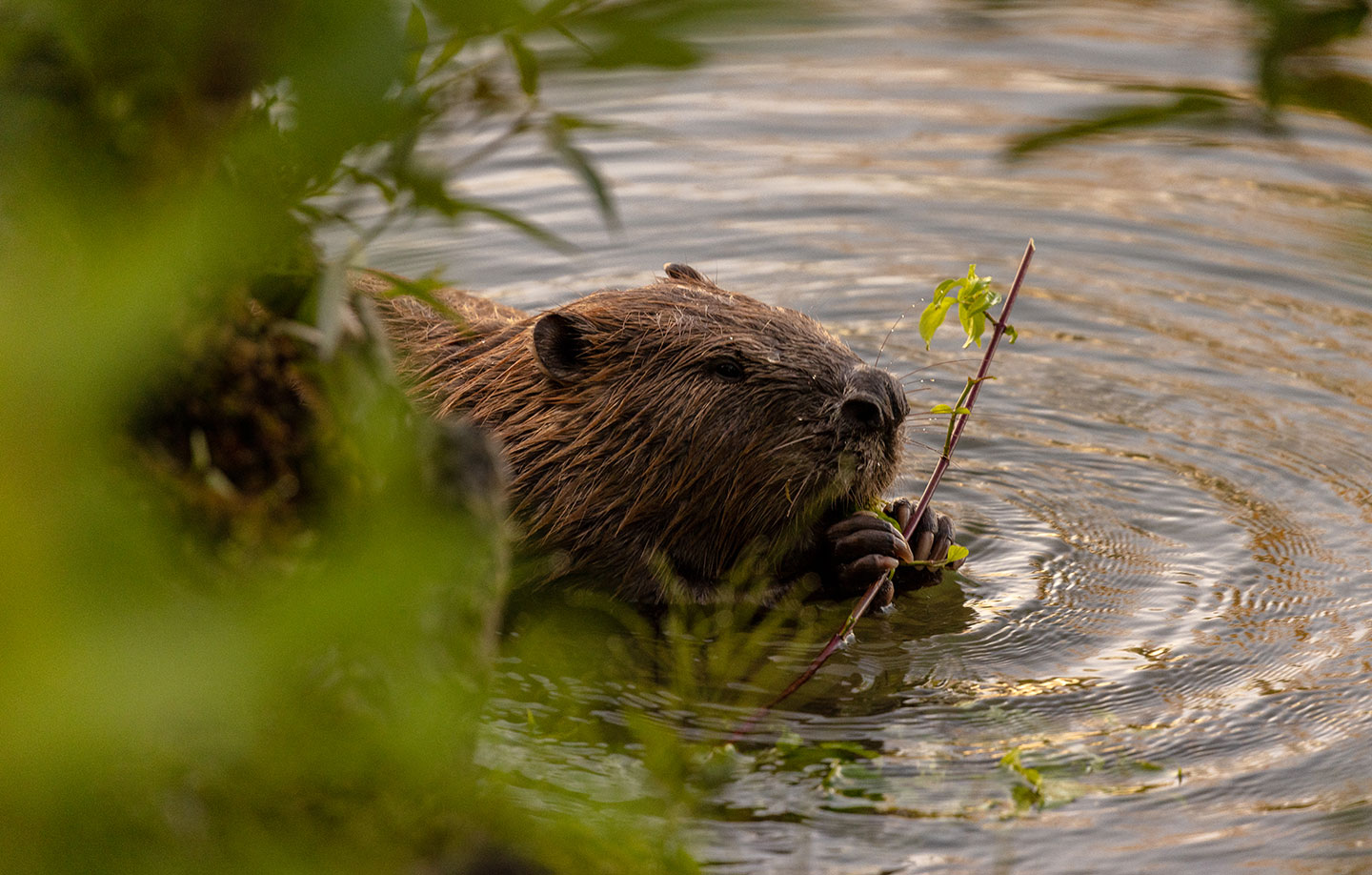
European beavers have been returning to streams, creating new ponds and wetlands. Those actions have been trapping carbon, new data show. That could help slow global warming.
Freshwater scientist Lukas Hallberg works at the University of Birmingham in England. For a year, his team studied a Swiss stream with beavers. The researchers measured water flow, plant growth and sediment. They also measured greenhouse gases, such as carbon dioxide and methane — another carbon-based compound.
Beavers slowed flowing water, creating ponds and wetlands, they found. That allowed soil floating down the stream to sink. These soil particles, like plants, are rich in carbon. Dead plants in the water plus that settling soil formed a carbon-rich muck. Pond water “acts like a lid,” Hallberg says, limiting oxygen’s access to that muck. This kept microbes from breaking it down and releasing its carbon into the air.
In nature, plants take in carbon dioxide and methane. This muck beneath a beaver-made wetland stored lots of their carbon, the researchers found — up to 14 times more than in the surrounding forest soils. Hallberg’s group shared details March 18 in Communications Earth & Environment.
Beavers, says Hallberg, are “a rare example of wildlife directly engineering new carbon storage.” — Laura Allen
CITATION
Journal: L. Hallberg et. al. Beavers can convert stream corridors to persistent carbon sinks. Communications Earth & Environment. Published online March 18, 2026. doi: 10.1038/s43247-026-03283-8.