

Earth has frozen over in the past — at least five times. Science fiction is full of takes about how it might happen again and the implications of a modern ice age. The problem: At a minimum, sci-fi gets the timetable for Earth turning into a “snowball” wrong — often laughably.
Here’s how some stories have portrayed it: Earth freezes. Humankind’s remnants huddle in ice caves, fending off giant alien monsters (Snowball Earth). Or people shelter in the New York Public Library as ice encases the Empire State Building (The Day After Tomorrow). Or a train hurtles in an endless loop, both protection and prison for Earth’s scant survivors (Snowpiercer).
These stories are all set in Earth’s near future, within a decade from now. And what makes their visions so chilling is that there’s at least a snowflake of truth in each. (Well, space monsters haven’t invaded Earth — yet.)
The most severe of Earth’s ice ages spanned from 720 million to 635 million years ago. It’s aptly been named the Cryogenian Period, from the Greek krýos (meaning cold) and génesis (meaning birth). At least twice during this period, glaciers extended from pole to pole. It could have amounted to a true Snowball Earth.
Although “maybe it was more of a Slushball Earth,” says Thomas Algeo. A geoscientist, he works at the University of Cincinnati in Ohio. Fossils, he says, suggest that even in the coldest times, seafloor-dwelling algae survived. They would have needed sunlight. So patches of open water must have persisted near the equator, he says.
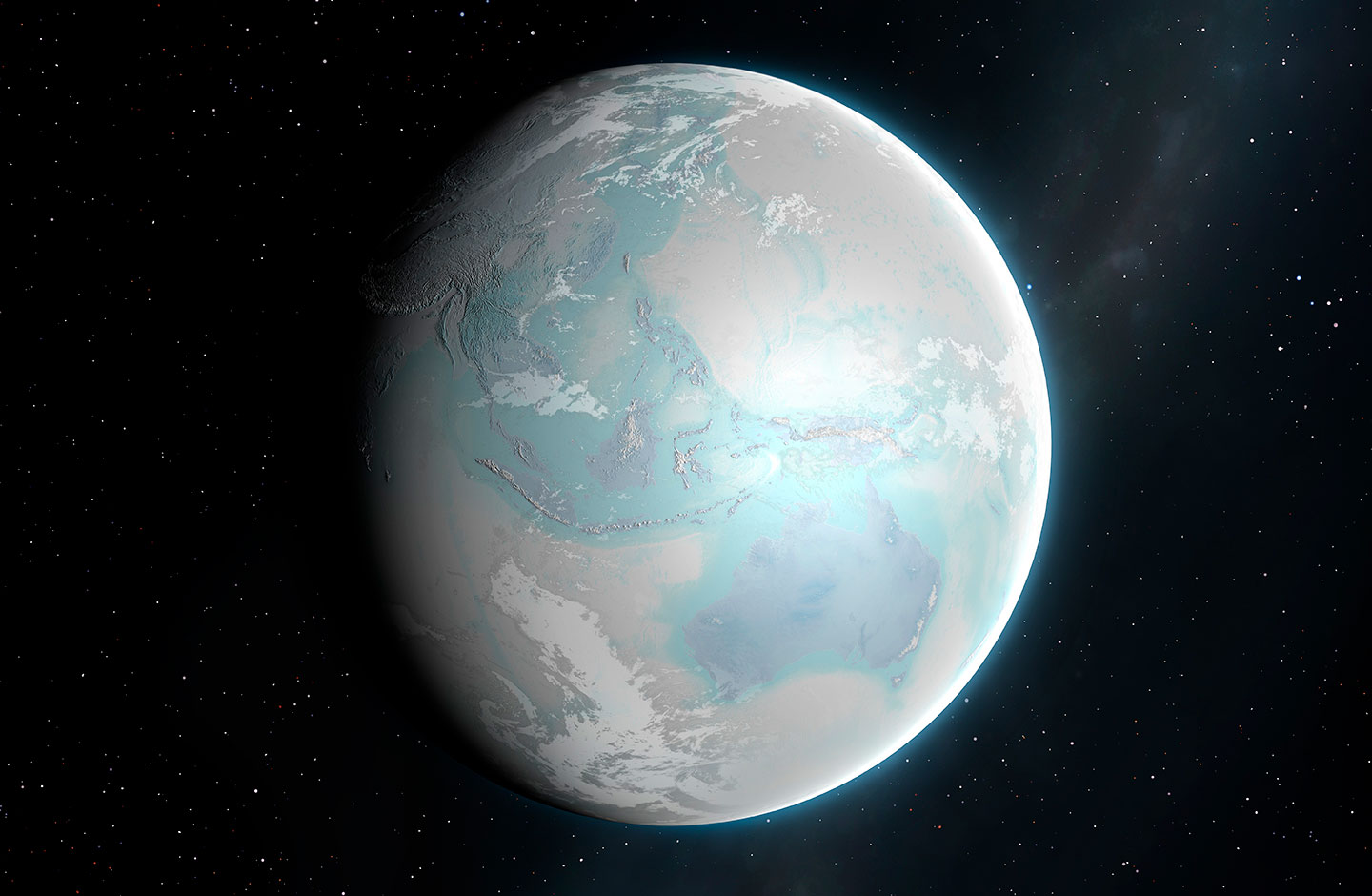
All such past deep freezes set in due to a series of geologic events. Take the Cryogenian. It developed after shifting tectonic plates caused a supercontinent to split apart. That increased rainfall and rock weathering. These dramatically reduced atmospheric carbon dioxide, which triggered a runaway cooling effect. Widespread ice, which reflects the sun’s warming rays back into space, would have exaggerated that cooling.
All of these processes are slow, which is not ideal for action flicks. Fortunately, sci-fi can play with time. It’s not unusual for fiction to take natural or human-caused climate interactions (and feedback effects) and accelerate or amp them up for drama.
The Day After Tomorrow, for example, which hit theaters in 2004, is based on a real-world scenario: the potential shutdown of a part of a global system of ocean currents. These move heat around the planet. Known as AMOC, this system is short for the Atlantic Meridional Overturning Circulation. Today, AMOC brings relative warmth to regions that might otherwise be frigid.
Back in the mid-1980s, geochemist Wallace Broecker suggested that large releases of freshwater to the North Atlantic Ocean could halt the AMOC. Such slowdowns or shutdowns in ocean currents have played a role in past ice ages, he said.
Scientists today fear it could happen again — and soon.
But to geologists, “soon” doesn’t mean in days to weeks (as portrayed in The Day After Tomorrow). For them, it means perhaps decades to a century.
The Day After Tomorrow’s filmmakers were “quite up-front” about their process, says Stefan Rahmstorf. For ultimate drama, they just “took known weather extremes — tornadoes, storm surges, cyclones, hail storms and blizzards — and amplified those.” Rahmstorf is a physical oceanographer at the Potsdam Institute for Climate Impact Research in Germany. He fact-checked aspects of the film.
Despite its super-short timeline for turning the Northern Hemisphere into a deep freeze, this film did point to some very real science, he notes. For instance, the movie starts out with its science hero giving a talk at a United Nations science meeting. Its topic was “the possible risk of a shutdown of the North Atlantic Current. I gave a very similar talk at such a UN conference in Buenos Aires in 1998,” Rahmstorf notes. “I even showed the same diagram [as the movie’s scientist].”
Snowpiercer imagines a different deep-freeze scenario. Geoengineering goes haywire in this 2013 movie, 2014 graphic novel and TV series (which ran from 2020 to 2024). Here, scientists release aerosols into the sky to reflect sunlight back to space. Their goal was to slow global warming. This idea is, in fact, based on a real type of Earth engineering known as solar-radiation management.
But in this story line, the aerosols proved an overkill. They plunged Earth into a deep freeze within weeks (hours, actually, in the novel).
Geoengineering strategies could cool Earth — just not that quickly. They would more likely take at least a few years. And they wouldn’t be that potent, either. To bring on an ice age, aerosols would have to be deliberately and repeatedly injected over generations, says Douglas MacMartin. He’s a climate engineer at Cornell University in Ithaca, N.Y.
How Earth freezes in Snowball Earth is still something of a mystery, as the manga is still in progress (though a streaming anime version debuted in April). Here, the transition to an ice world takes about a decade. And — spoiler alert — giant alien monsters might have had something to do with it. (For that, scientists don’t really have an answer.)
But the premise behind these stories — that Earth could freeze over — is grounded in very real science. It’s happened before and could again. But it won’t happen quite the way these stories tell it.
Do you have a science question? We can help!
Submit your question here, and we might answer it an upcoming issue of Science News Explores