

Four scientists splashed into the middle of the Indian Ocean near a small, tropical island in January 2024. They timed their arrival for midday — when sharks are less active. A ship had brought them as close to Nelsons Island as it could get without running aground on shallow coral reefs. From there, the scientists had to jump in and swim the rest of the way. They towed waterproof bags full of supplies through the waves. Those bags held camping gear, science equipment, food and water — everything they would need for two weeks on the island.
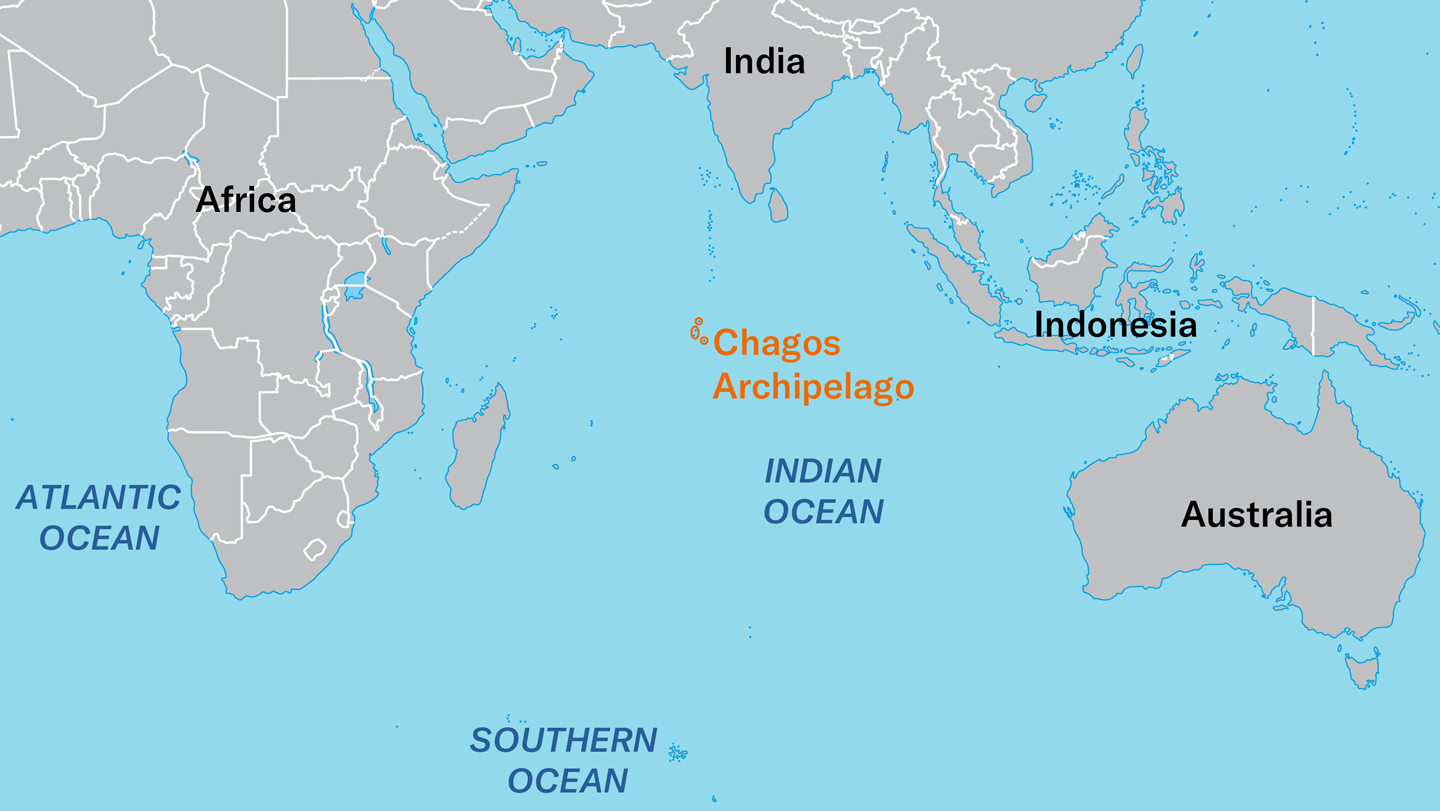
“There’s no feeling quite like being dropped off on an island by boat,” says Alice Trevail. She’s an ecologist at the University of Exeter in Cornwall, England. This was her fifth expedition to the Chagos Archipelago. A chain of some 55 islands, it sits about 1,600 kilometers (1,000 miles) south of India and 3,400 kilometers (2,100 miles) from the eastern coast of Africa.
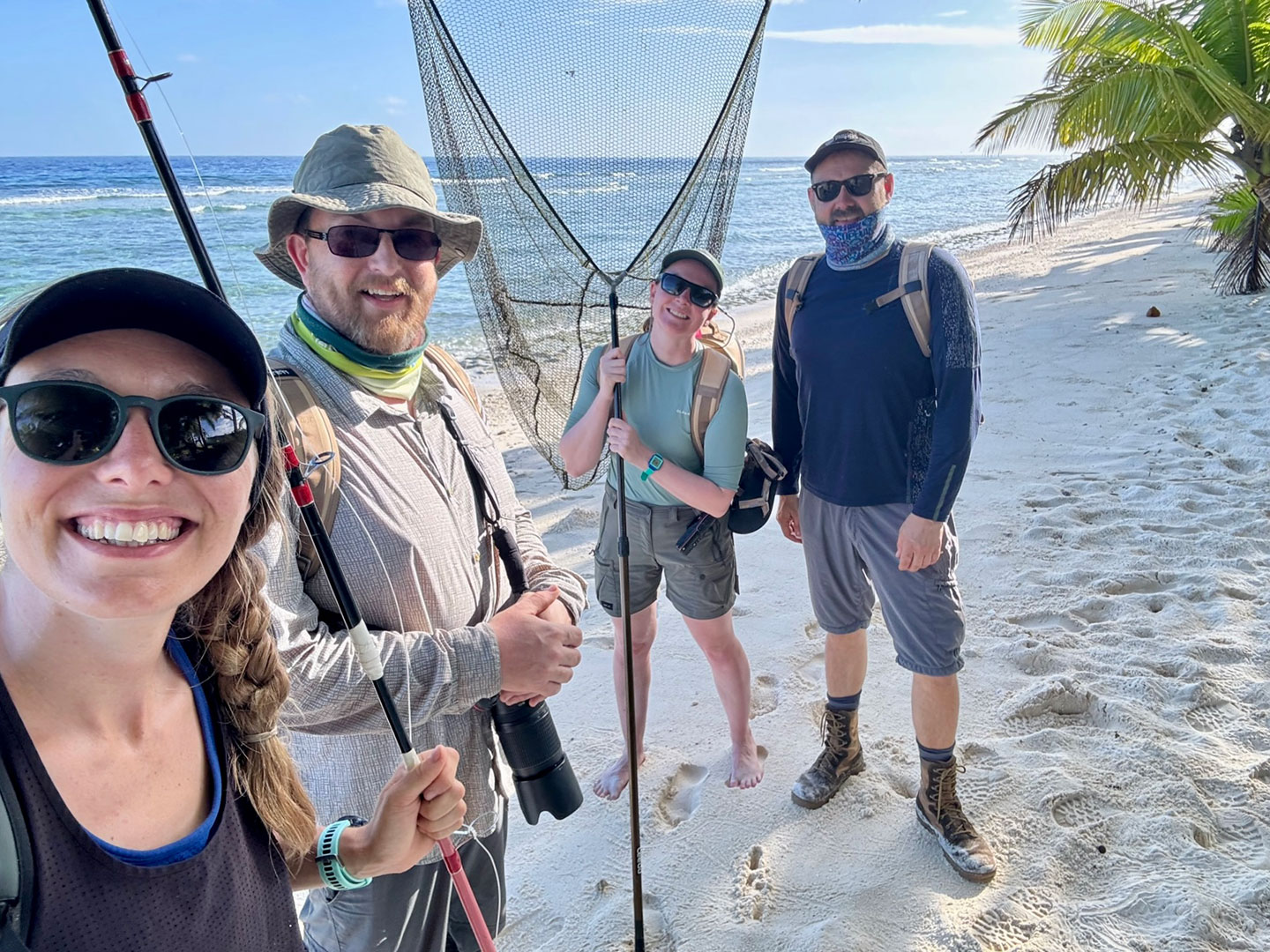
It took the team all afternoon to tote their supplies to Nelsons Island. Once on dry land, the island’s residents — thousands of seabirds — greeted them. Some perched in trees. Others wandered the shore. The stink of bird poop filled the air along with chirps, squawks and chatters.
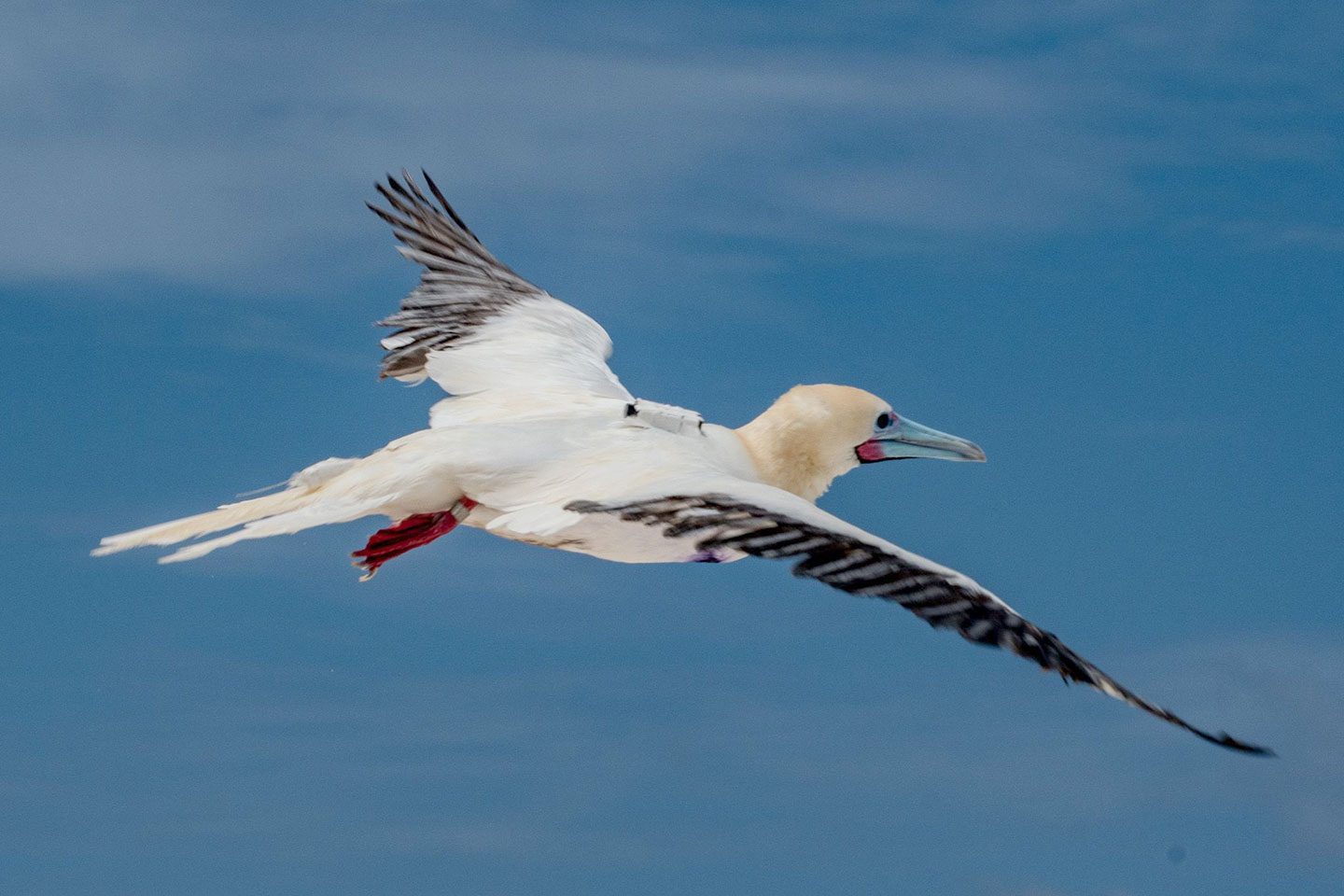
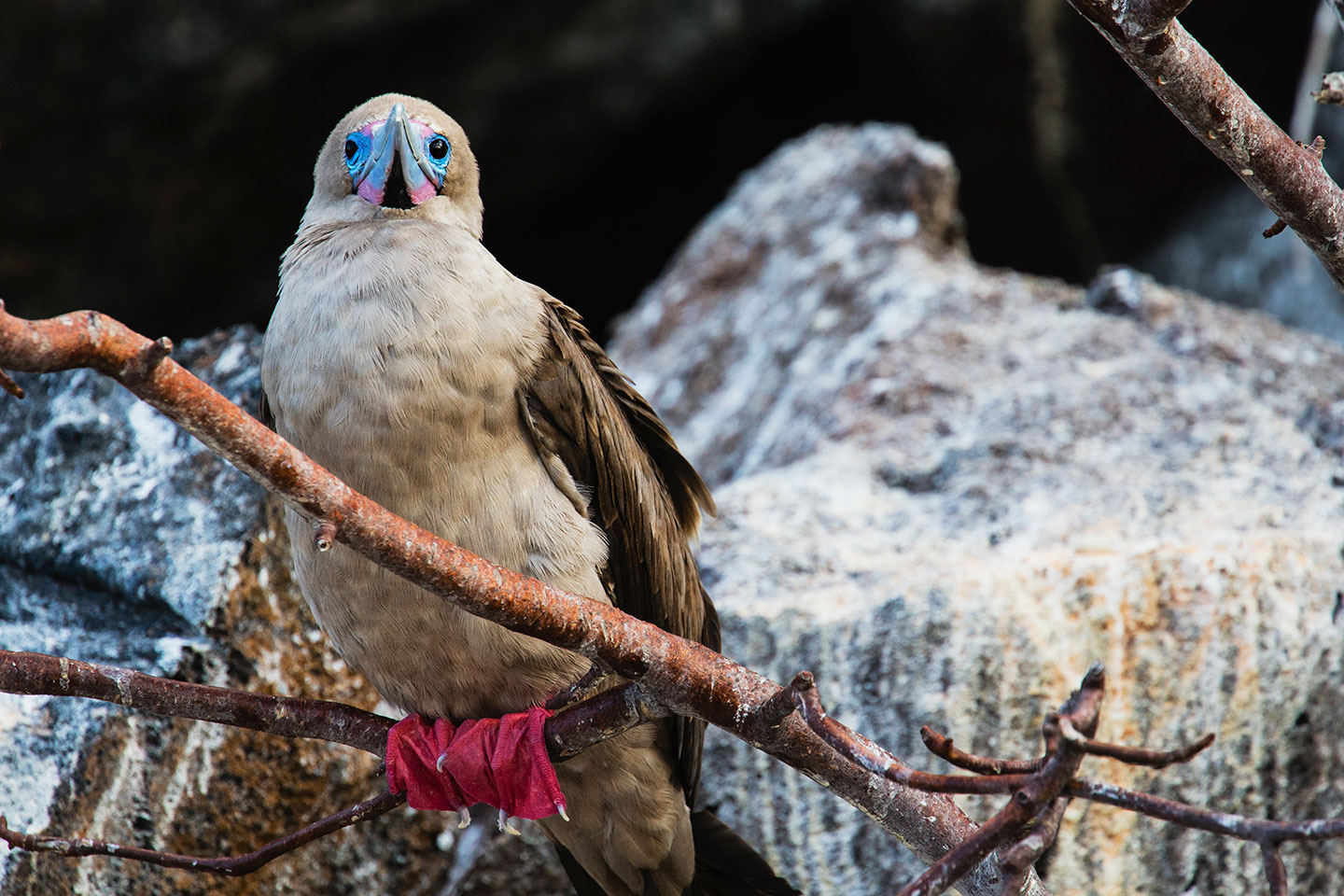
Red-footed boobies are one of 18 seabird species that nest on Chagos islands. They’re large, about the size of a goose. They get their name from their bright red, webbed feet. On tropical islands, they gather twigs with their blue and pink beaks to build nests in trees and shrubs. There they’ll raise fluffy white chicks.
But these birds spend only a fraction of their time on land. A large part of their days is spent far out at sea, where they forage and dive for fish and squid. While scientists travel to remote places to find the birds, red-footed boobies head to even more remote places to find food.
These seabirds were the reason the scientists had made their long journey. Like many uninhabited tropical islands, Nelsons is remote and tiny. But seabirds can have huge impacts that reach far beyond an island’s shores. These scientists had come to learn how red-footed boobies affect the plants and animals around them — and what they need to survive.
Until recently, the time these birds spend at sea had been a bit of a mystery. “We know so much less about what they do when they go off beyond the horizon,” says Ruth Dunn. Another ecologist who made this trip with Trevail, Dunn works at Lancaster University in England. She and her teammates now are using high-tech tools to find out what red-footed boobies do when they fly off.
And they’re learning how the birds link ecosystems on land with those at sea.
High-tech tracking
To track red-footed boobies in flight, the scientists outfitted the birds with small, lightweight loggers and cameras.
One type of data logger, a global positioning system (GPS) unit, tracks a bird’s location from satellite signals. A global location sensor (GLS) tag tracks its location based on light levels. An accelerometer logs when a bird dives, swerves or flaps its wings. And an immersion logger records when a bird leaves the air for the water.
Over several years, the ecologists have used these tools to collect data on the birds’ journeys.
In 2024, they added tiny video cameras for the first time to the birds’ backs so they could see what the birds see. Watching those videos is incredible, says Dunn. Now she can see when red-footed boobies fly alone, when they meet up with other birds and how they catch fish.
The scientists work quickly as they catch and tag each bird. They want to disrupt the birds as little as possible. Skilled at handling seabirds, Trevail can tag a bird in about 10 minutes. Even so, she notes, there’s always the risk of injury. “They are quite strong birds,” says Trevail. “We wear gloves and glasses, because their beaks are very sharp.”
Tagging is a two-person job. One scientist holds the booby. Another uses stretchy waterproof tape to stick the loggers to certain feathers on its back and tail. Very small tools, like GLS and immersion loggers, can be attached to a ring around one leg.
Scientists haven’t always been able to track seabird journeys. But as new tools are invented, scientists can collect more types of data, says Alice Bernard. An ecologist at University of Michigan in Ann Arbor, she has explored the history of seabird tracking.
“GPS tracking devices really made a difference,” she says. GPS was first used to track seabirds in 2001. Just a decade later, some 100 projects were using it on seabirds around the world. Fewer birds have been tracked in the tropics, Bernard notes, so less is known about flight paths of tropical species, such as boobies.
The tools have a little heft. That means data loggers work best with bigger species, such as boobies. Still, the scientists can’t weigh down a bird too much. Scientists typically make sure these tools do not exceed 3 percent of a bird’s weight.
As technology advances, data loggers have shrunk, allowing scientists to attach them to more types of birds. So more data are filling online seabird databases, Trevail has noticed. And, she adds, “Research has become so much more collaborative because everyone is sharing the data.” That’s helping scientists better understand birds that fly between countries, continents and oceans.
Do you have a science question? We can help!
Submit your question here, and we might answer it an upcoming issue of Science News Explores
A day in a booby’s life
Once tagged, the boobies go about their daily lives, flying, feeding and resting. The scientists will retrieve the cameras and GPS loggers — and their data — later in the expedition. Some of the smallest loggers can transmit data via satellites. So the researchers will leave these on the birds until a follow-up trip.
The scientists traced the boobies’ flight paths using the GPS data. Most of the Chagos birds, they learned, take daytrips when they fly out to sea to find food.
They typically leave the islands in the morning. Many meander above the water all day in search of fish. Their trips ranged widely. The shortest was about 2 kilometers (1.2 miles). Some spanned more than 1,000 kilometers (620 miles). On average, these birds flew nearly 300 kilometers (190 miles) while foraging.
As dusk approaches, most make a beeline home. “The longer the boobies waited before starting to return back to the colony, the faster and the more direct they flew,” Trevail reports.
Red-footed boobies are excellent navigators. How they navigate, though, is not entirely known. They can find their way across the ocean despite a lack of landmarks. “There’s some kind of learning of these routes back to the colony,” she says.
No landmarks, no problem

The tracking data also show where red-footed boobies dine. Birds that nest in different places hunt in different parts of the ocean, these data show. Knowing this can help scientists identify parts of the sea that need to be protected from problems such as overfishing.
Like many seabirds, boobies live and nest in colonies. A colony offers protection from predators. There are several colonies of red-footed boobies on Chagos islands. Logger data show that each colony’s birds tended to forage in a different part of the sea. That would help reduce competition between groups.
But a booby must still compete for food with the rest of its colony. So larger colonies tend to hunt over larger spans, flying farther.
Red-footed boobies in the largest Chagos colony traveled up to about 1,500 kilometers (930 miles) roundtrip on foraging trips. They tended to leave earlier in the morning and came back later at night “to give themselves more time to reach these foraging grounds that are further away,” says Trevail. “Being in a bigger colony must be worth having to forage slightly further out at sea,” she says.
Fish storms
Red-footed boobies are well adapted for plunging into the water. While foraging, they soar above the sea. When they spy a fish, they dive. With strong necks and streamlined bodies, the birds pierce the water surface at high speed. Webbed feet and waterproofed feathers help them pursue their prey.
But boobies have another hunting strategy, the scientists have learned. And it’s rather unexpected.
From accelerometer data, Dunn noted that these birds more often chase after fish when the weather is windy. This surprised her. “I kind of thought that in high winds the water might be a bit more choppy,” she says. Birds should be less able to see fish in rough water. Why, she wondered, would boobies pursue fish on windy days?
To learn more, Dunn and her team spied on the boobies. Tiny video cameras, each about the size of a human thumb, were attached to the boobies’ backs. These recorded their flights at sea. After the birds returned, the scientists collected all the cameras they could find.
Watching these videos “was just like the best thing ever,” says Dunn. They showed red-footed boobies chasing after fish — but not plunging into the water. The boobies were catching flying fish — in mid-air.
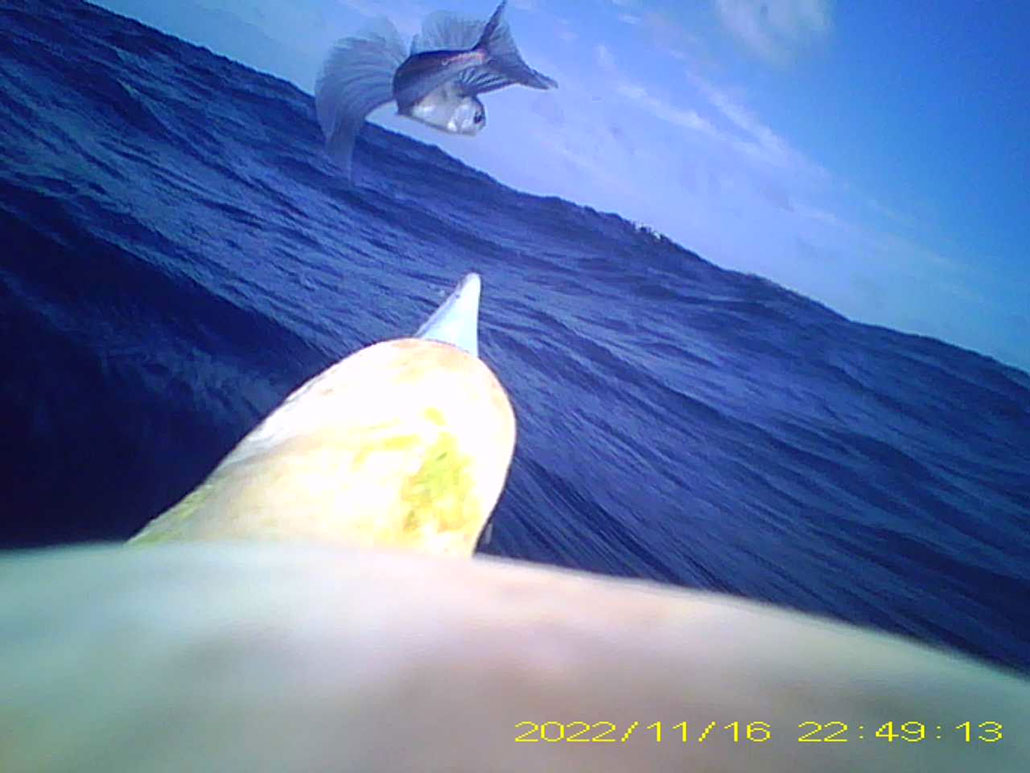
Flying fish mostly swim. At times, though, they soar just above the surface. To get out of the water, a flying fish speeds toward the surface and leaps. The fish swishes its tail back and forth to propel itself upward. Once in the air, a flying fish extends the fins at its sides like airplane wings. This lets it soar.
“These fish can fly really far, like dozens and dozens of meters [yards]. And they seem to do so more when it’s windy,” says Dunn. Flying fish might even take longer flights if wind helps them glide on the air.
People had occasionally seen red-footed boobies nabbing flying fish in the air, says Abigail Schiffmiller. But until the videos, no one knew how common it was. Schiffmiller studies red-footed boobies as a graduate student at the University of Alaska in Fairbanks. (She taught Dunn how to attach cameras to these seabirds.)
Like the team in Chagos, Schiffmiller uses cameras and loggers to find out how the birds forage. So far, she’s videoed more than 30 birds in the Pacific Ocean. Like Dunn’s videos from the Indian Ocean, these show the birds catching flying fish mid-air. “They dive and kind of pull up before they actually enter the water,” explains Schiffmiller.
She invented the term “fish storm” to describe a swarm of flying fish above the water. These fish storm out when they’re trying to avoid predators, such as tuna and dolphin. “[They] basically only fly when there are marine predators pushing them up,” Schiffmiller explains. Once airborne, the fish are safe from threats in the water. But red-footed boobies and other seabirds now can gobble them up, the new videos suggest.
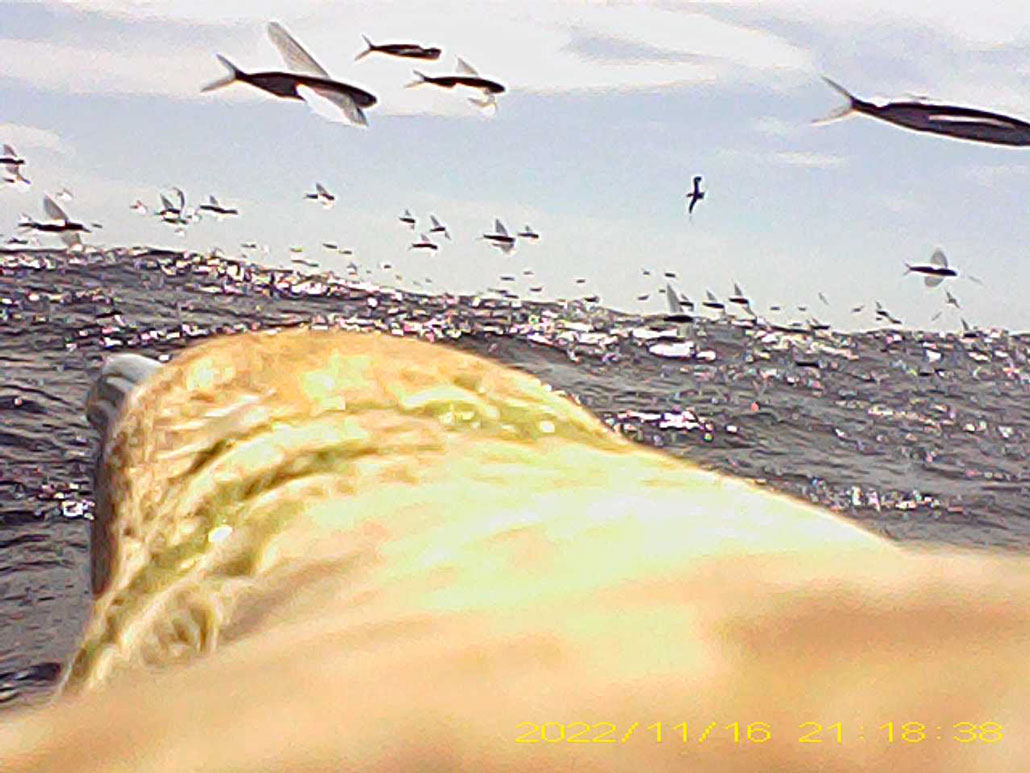
In some of Schiffmiller’s videos, the boobies fly back and forth through clouds of flying fish, catching and eating as many as they can. The boobies caught about one-fifth of their prey this way. “Mostly, it’s flying fish,” she says. “But they are also going after flying squid.” (Like the fish, some squid can propel themselves into the air.)
For a red-footed booby, it’s far easier to catch a fish in the air than by plunging into the sea. It takes a lot of energy to dive and then take off. “They have to flap really hard and do a long run to get up off the water,” explains Schiffmiller.
Her research aims to figure out if red-footed boobies rely on fish storms to get enough food. If so, overfishing of predators, such as tuna, might hurt the boobies, too. There might be fewer fish storms.
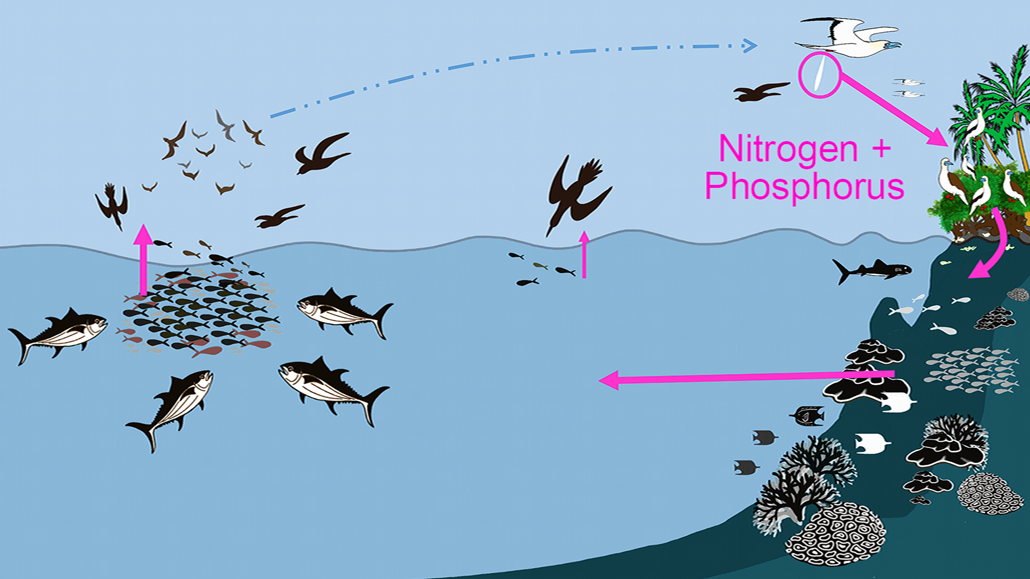
And less food for boobies could in turn have ripple effects to both the islands where they nest and the coral reefs nearby.
Seabird poop connects land and sea
After a day catching fish at sea, most red-footed boobies return to their island homes for the night. On Nelsons Island, the visiting scientists tried to sleep on cots under mosquito nets. The seabirds squawk and chatter all night. “It’s such a noisy place to sleep. It always takes me a few nights to get used to it, because they’re so loud,” says Trevail.
As noisy seabirds digest the fish they caught by day, they also poop. A lot. Red-footed boobies are particularly prolific poopers. Their islands are covered with splats of guano. “They eat a lot and, therefore, poo a lot,” observes Dunn.
Guano is smelly and messy. It’s also valuable. Chock full of nutrients, such as nitrogen, guano helps an island’s plants grow faster. When washed into reefs, the poop’s nutrients feed corals and algae, too. Reef fish grow larger with more to eat.
So seabird poop helps fertilize both island and coral-reef ecosystems.
To better understand this nutrient cycle, Dunn, Trevail and others worked with Stephen Votier. He’s an ecologist at Heriot-Watt University in Edinburgh, Scotland. Together, they estimated how much nitrogen red-footed boobies bring to the Chagos islands.
Their first question: How much time do the birds spend on land? Answer: For adults it’s about 80 days a year — and 281 nights. Those data came from small GLS loggers, which stayed on boobies’ legs for up to two years.
How much guano will build up also depends on how much the boobies poop. Luckily, the team didn’t need to figure this out. Years earlier, other scientists collected data on the birds’ pooping. Each bird makes some 26.4 grams (almost an ounce) of guano per day. Of that, 18.1 percent is nitrogen.
With these numbers, the scientists calculated that the more than 43,000 adult red-footed boobies that nest in the Chagos Archipelago add 37 metric tons (41 U.S. tons) of nitrogen to the islands each year. That’s about the weight of six African elephants. Because they only collected GLS data for adult birds, these numbers didn’t include poop from young boobies. So the total is probably much larger.
All this poop likely affects tropical ecosystems in many ways. Ecologists are still exploring how the nutrients help coral reefs, algae and plants. But it’s clear that red-footed boobies play a big role in moving nutrients between the ocean and land.
After nearly two weeks on Nelsons Island, it was time to leave. The scientists packed up their supplies, equipment, data and wastes. Then they swam to meet their ship beyond the reef.
According to Trevail, the birds don’t appear affected by visiting researchers. “They seem to carry on as usual,” she says.
But being on an island full of seabirds always affects her. “It’s a really special feeling,” she says. “You’re completely immersed in that environment.”